

Flexibility is your greatest tool in the Alaska wilderness.
Arrival at Wildman Lodge
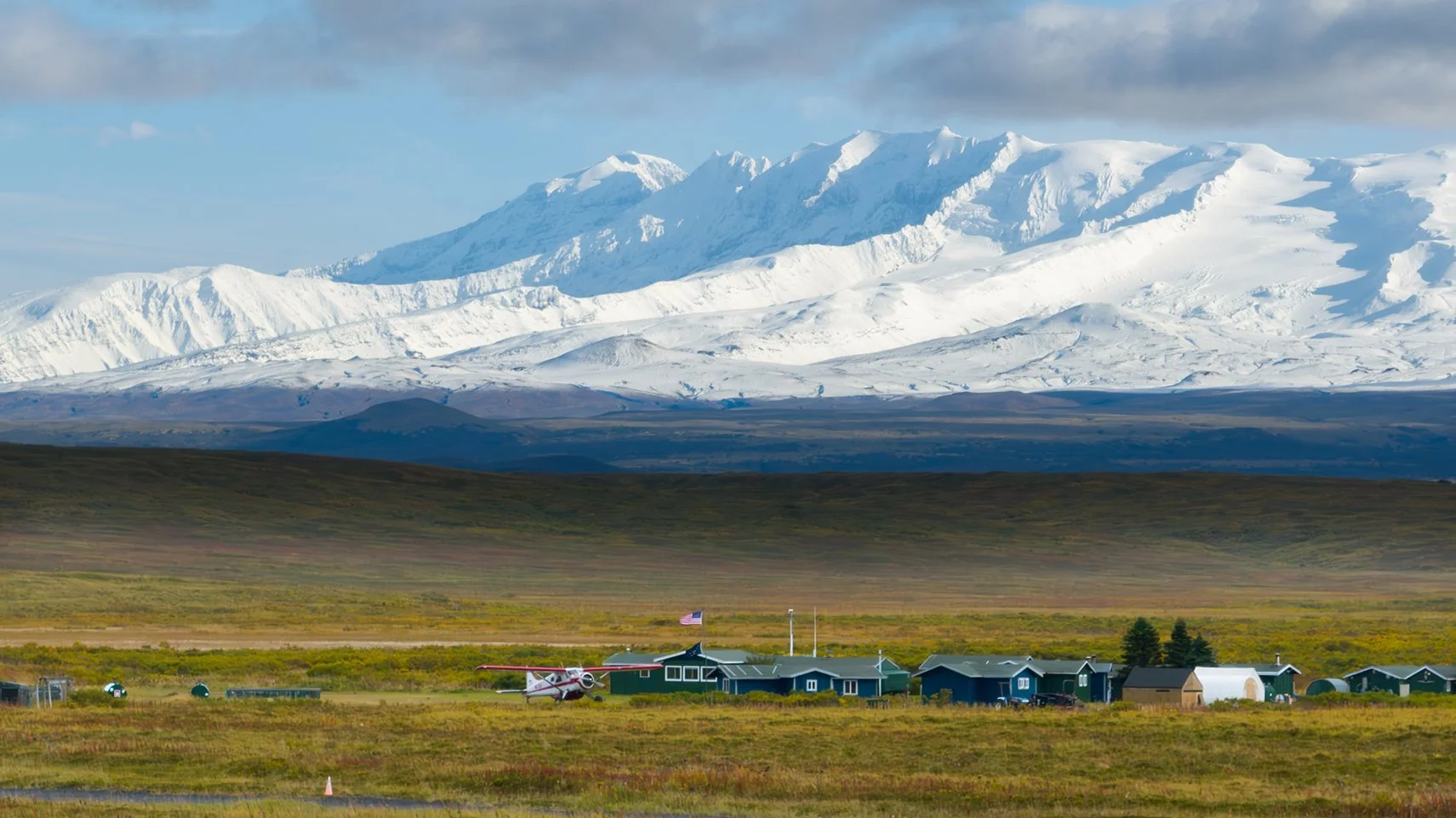
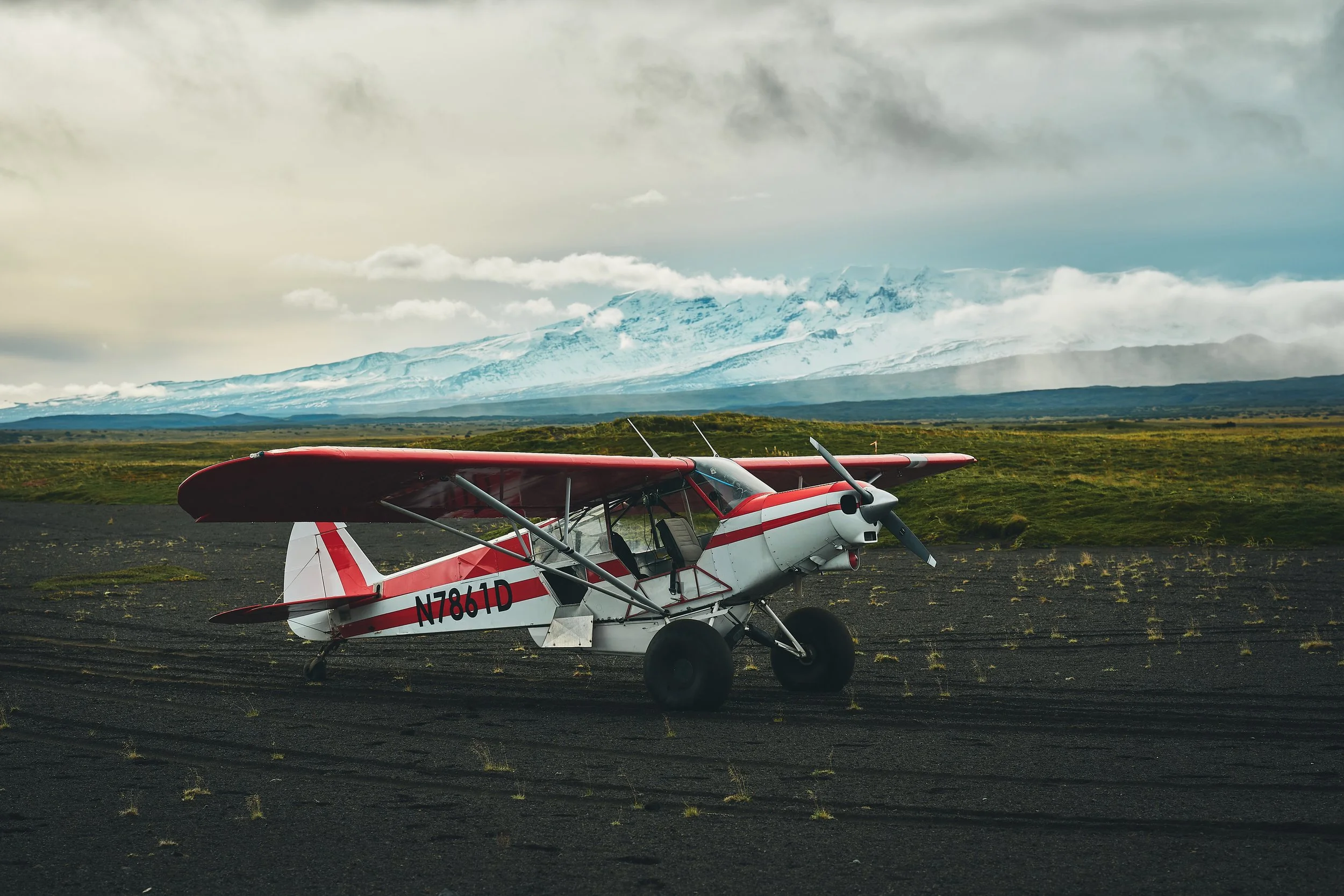
Your Wildman Hunt begins the moment you land on our private airstrip. After a scenic flight across untouched Alaska wilderness, you’ll begin final preparations for the field.
Gear & Orientation
Your guide will walk you through a complete gear shakedown, helping you refine, repack, and prepare specifically for spike camp conditions. Accommodations during this time may be in a cabin, shared space, or wall tent; comfortable, practical, and built for the transition into the backcountry.
Charter Flights
Per your booking agreement, Wildman Lodge coordinates flights to and from the lodge. Clients are responsible for payment upon arrival to the lodge ($1,500 per person one-way, including up to 75 lbs of gear). Payments can be made by cash, check, or card; wiring requires prior arrangement.
Rifle Zero
Before heading into the field, each hunter confirms rifle zero under guide supervision. This session builds confidence, ensures accuracy, and strengthens guide–client communication.
Paperwork & Readiness
Licenses and tags will be verified, and required paperwork completed. Once gear is set and rifles are confirmed, you should be ready to depart at any moment, weather determines all movements.
Departure for Spike Camp
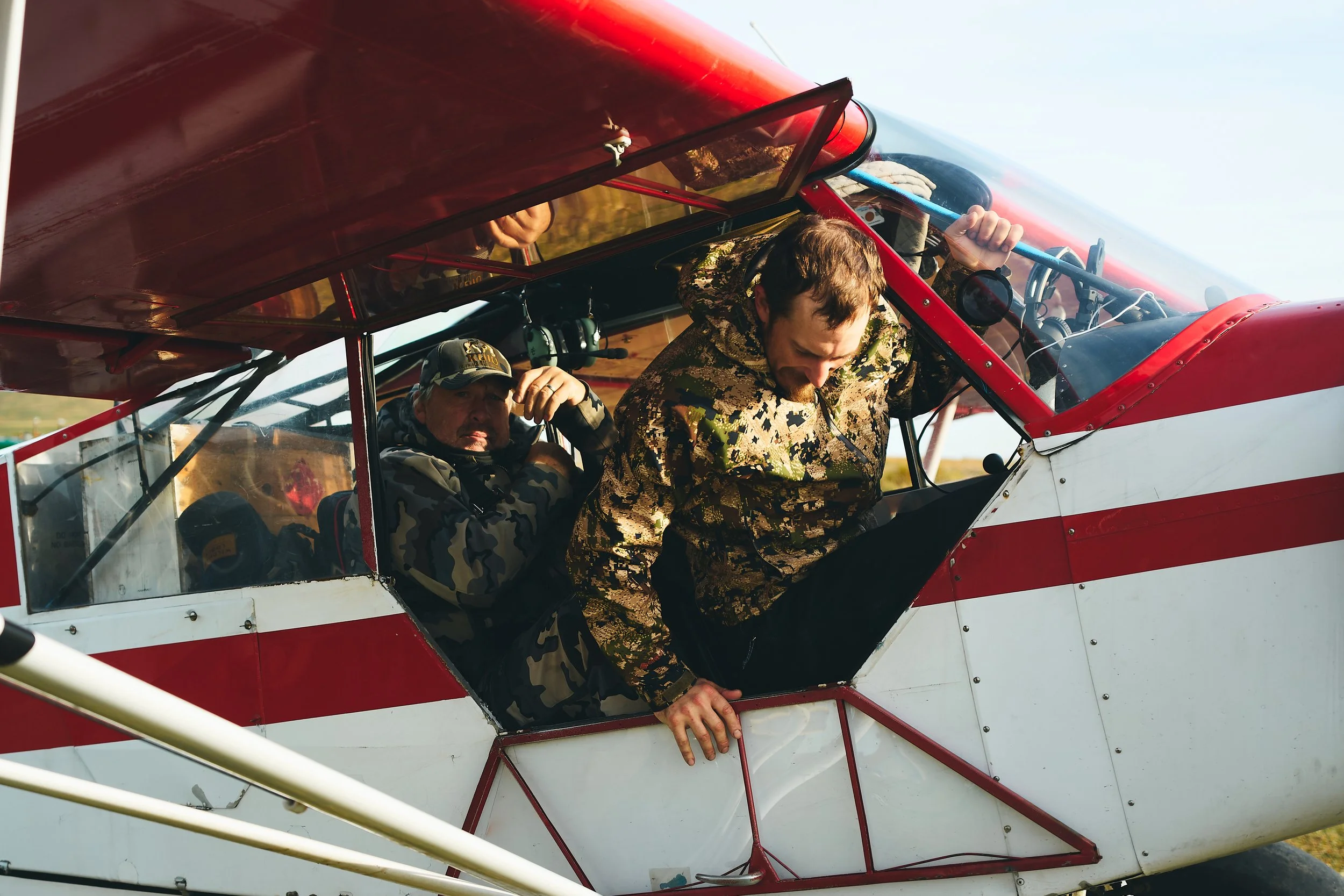
Travel to camp is by bush plane or jet boat, depending on conditions. A full safety briefing comes first. In accordance with Alaska law, no hunting may occur the same day you fly into the lodge or camp; hunting begins the following morning.
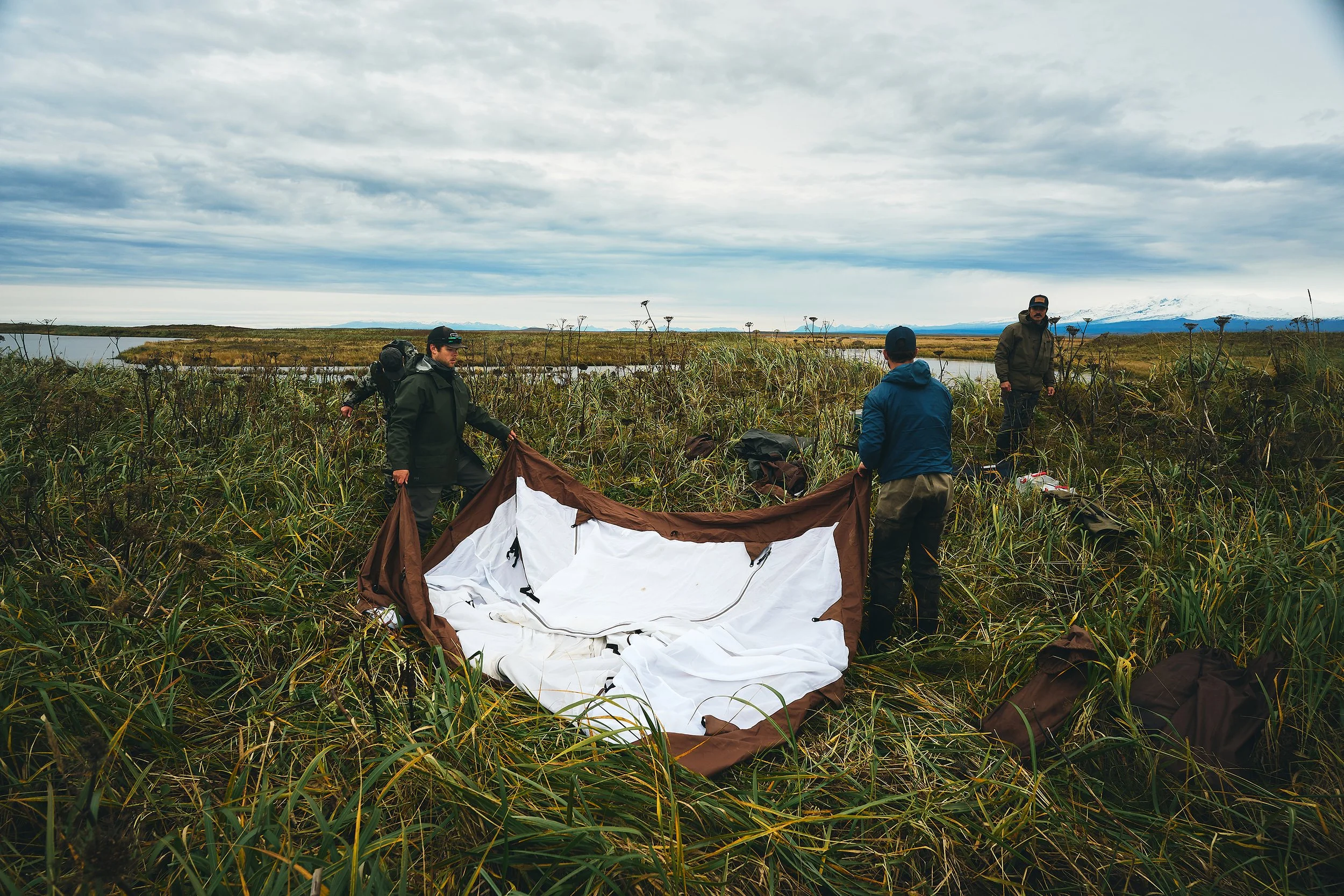
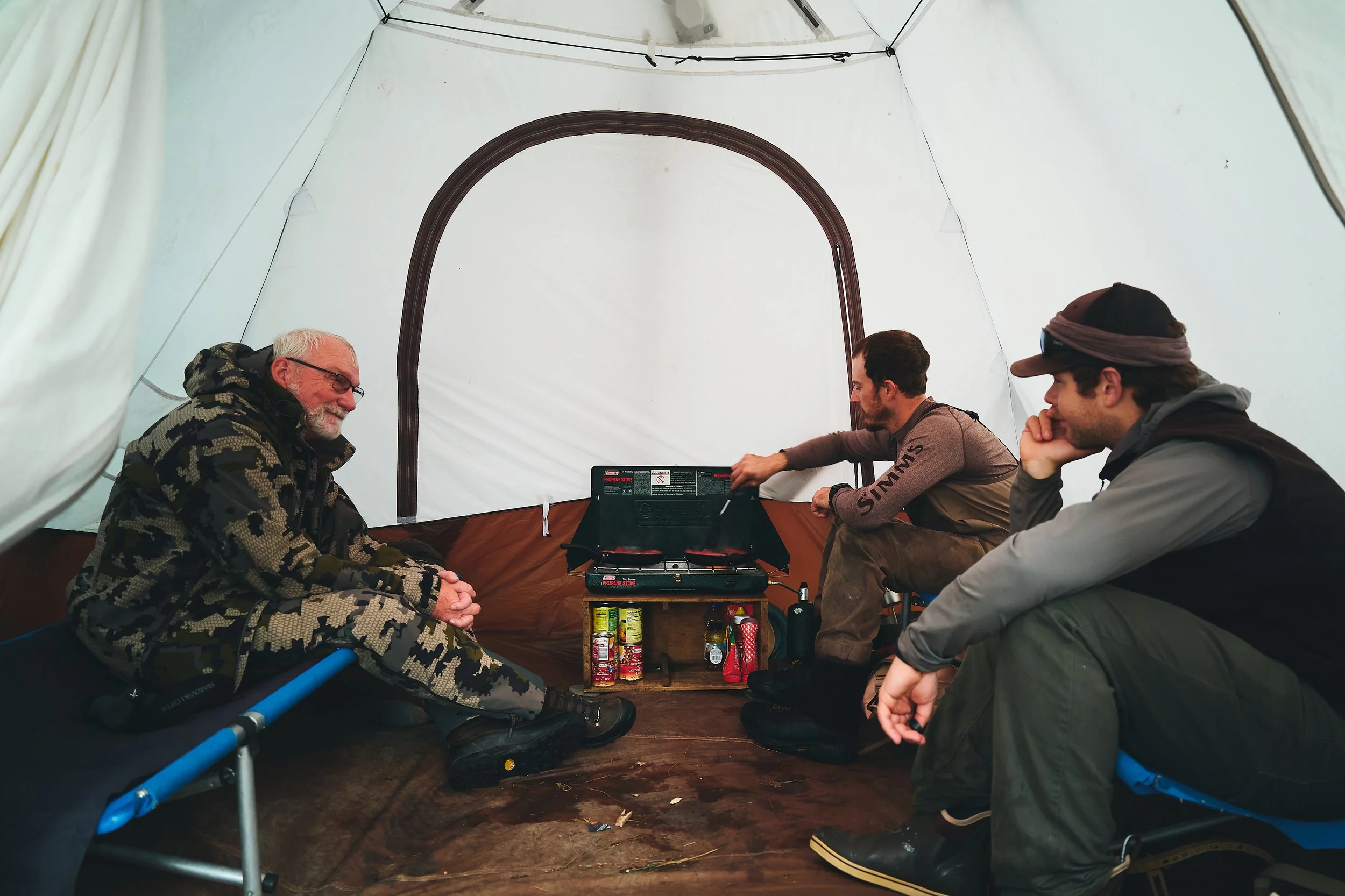
Spike camps are lightweight, strategic, and built for both comfort and safety.
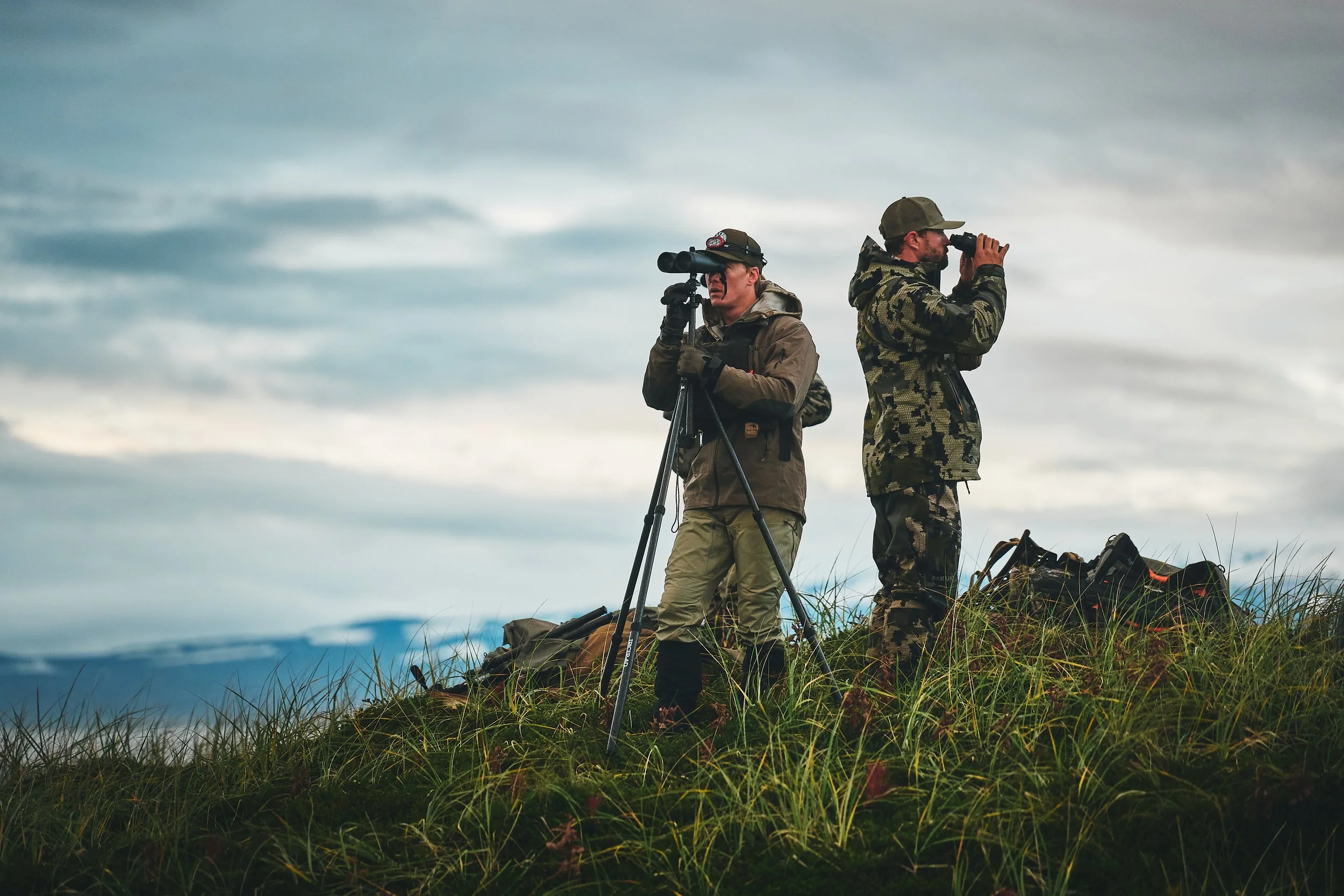
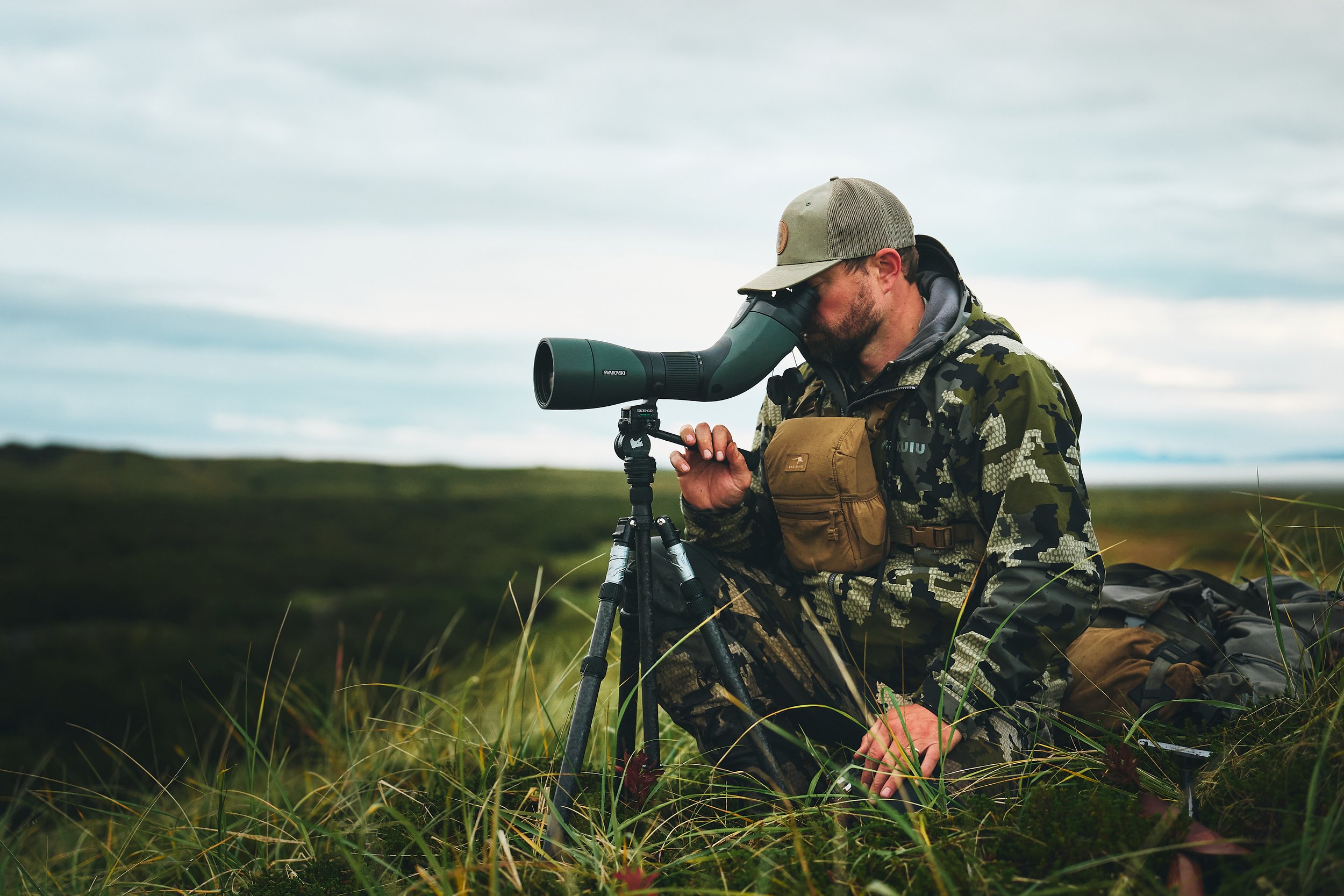
Time behind the glass is the difference between opportunity and a missed chance.
Life in Spike Camp & The Hunt
Spike camps place you in the heart of premier big-game habitat.
Camp Setup
Spike camps typically include:
• 8x8 or 10x10 tents with cots and sleeping pads
• Two-burner stoves for heat and cooking
• Chef-prepared meals paired with hearty camp cooking
Safety & Communication
Your guide accompanies you at all times. Guides carry both marine radios and inReach satellite devices for 24/7 communication. Solo hunting is not permitted.
Firearm Protocol
To ensure safety and clean harvests:
• No chambered rounds while moving or glassing
• Chambering occurs only during final stalk, at guide discretion
• All shots on primary game animals must be guide-approved
• Typical shot limits: ~200 yards for moose, ~150 yards for bear
If an animal is wounded and unrecovered, the tag is considered filled. Clear communication before and during the shot is essential, and guides may assist with backup shots when necessary.
Life on the Spotting Knob
Success begins with glassing; hours of patient, focused time behind optics. Most glassing points are within a half-mile of camp.
Moose Hunts
Hunters generally see 1–3 bulls per day. Trophy bulls typically exceed 60 inches. Days are long, often 12 hours in the field.
Once a bull is down:
• Immediate tagging and paperwork
• Photos
• Skinning and hide care (critical due to hair-slip risk)
• Possible late-night work in cold conditions
• Return to camp with hide before pickup
Bear Hunts
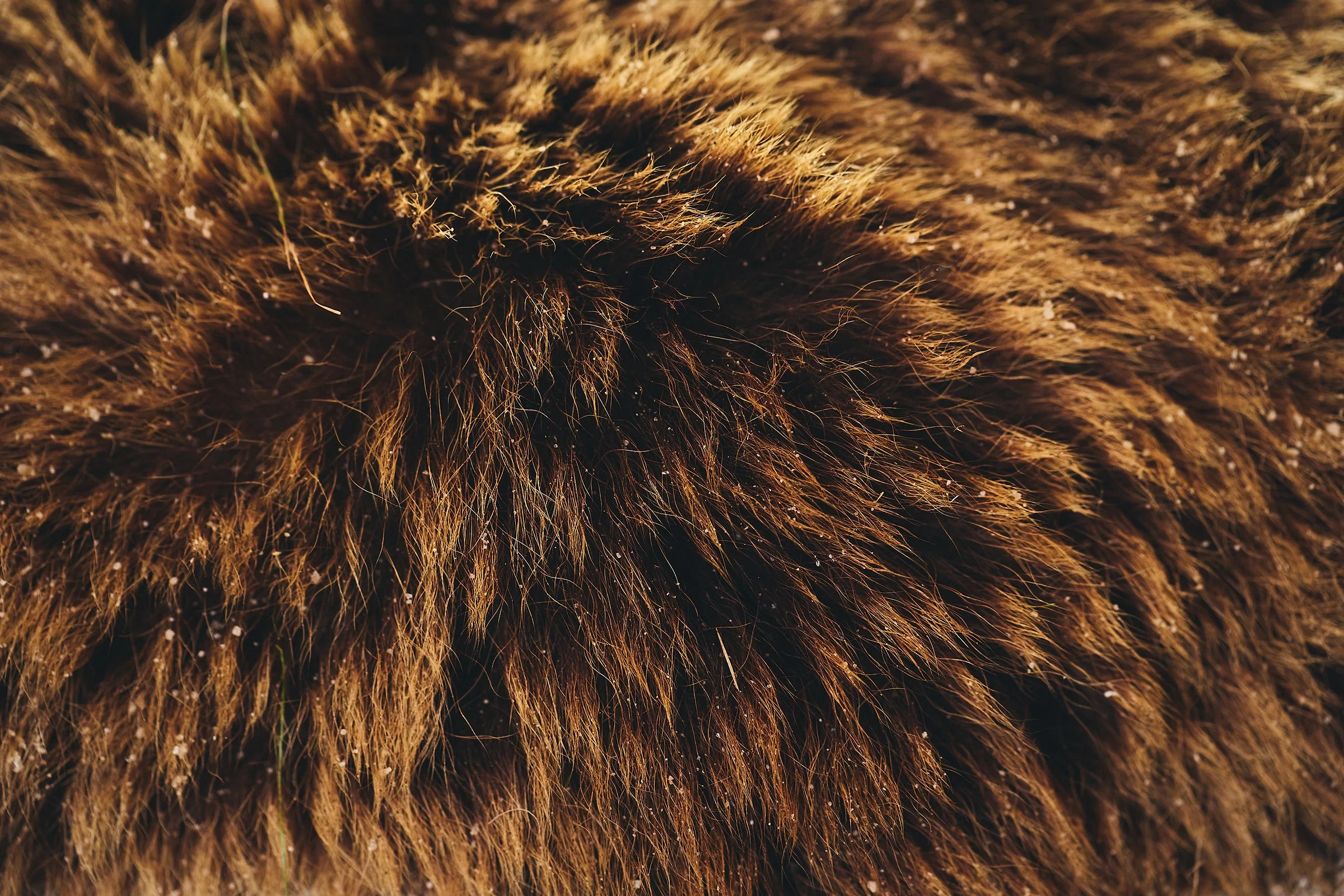
Wildman country produces some of the world’s largest brown bears, 29–30 inch skulls are not uncommon. Guiding focuses solely on mature boars.
Spring Hunts
• Fewer bears, but higher trophy likelihood
• Long days (16+ hours of light)
• Guides assess hide quality before stalks
Fall Hunts
• Bears concentrated on salmon, beaches, and berry tundra
• Expect 3–5 bear sightings per day
• Hide quality typically excellent
After a bear is down:
• Immediate tagging
• Partial or full skinning depending on conditions
• Cold nights are common during processing
• Hide must return to spike camp before client extraction
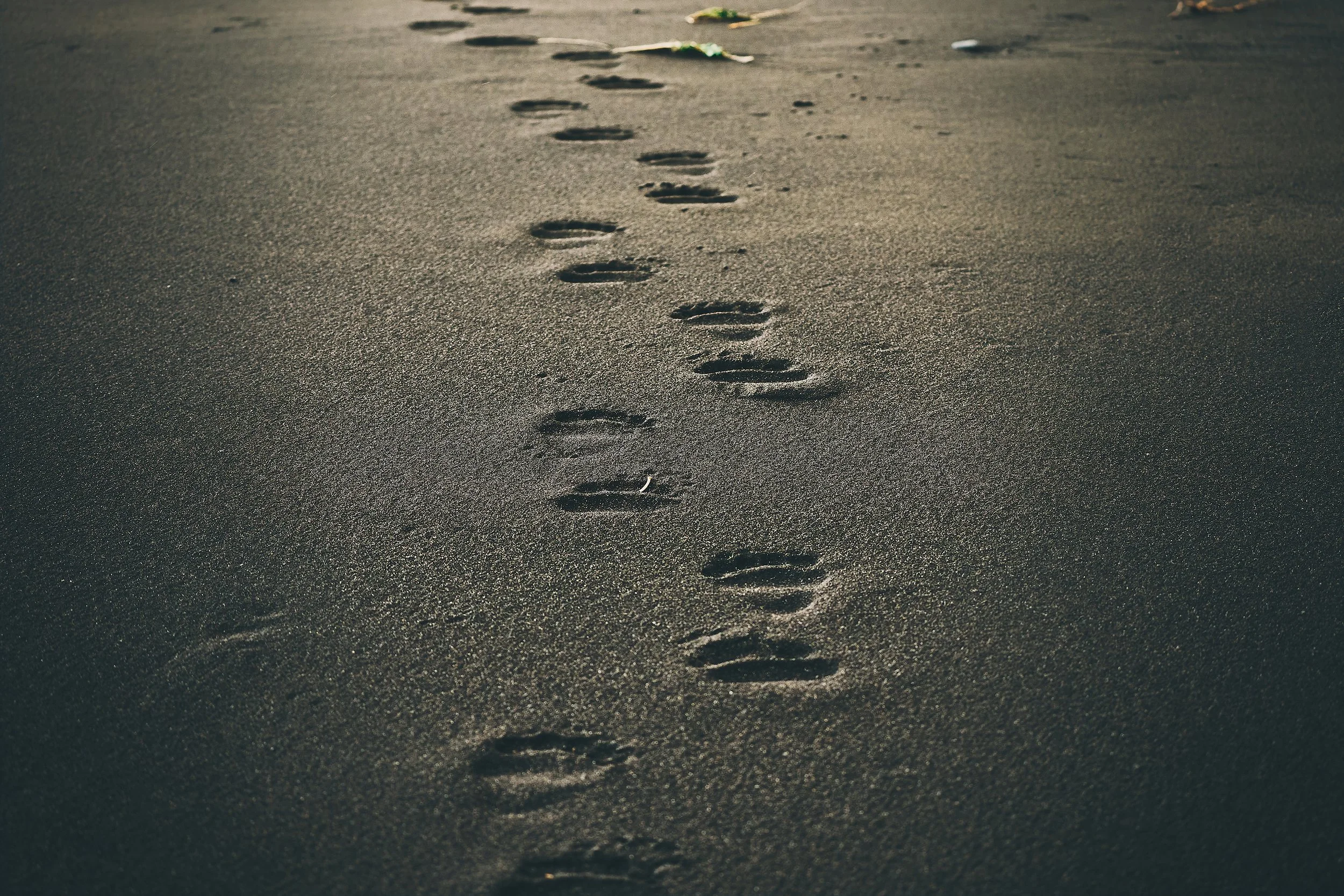
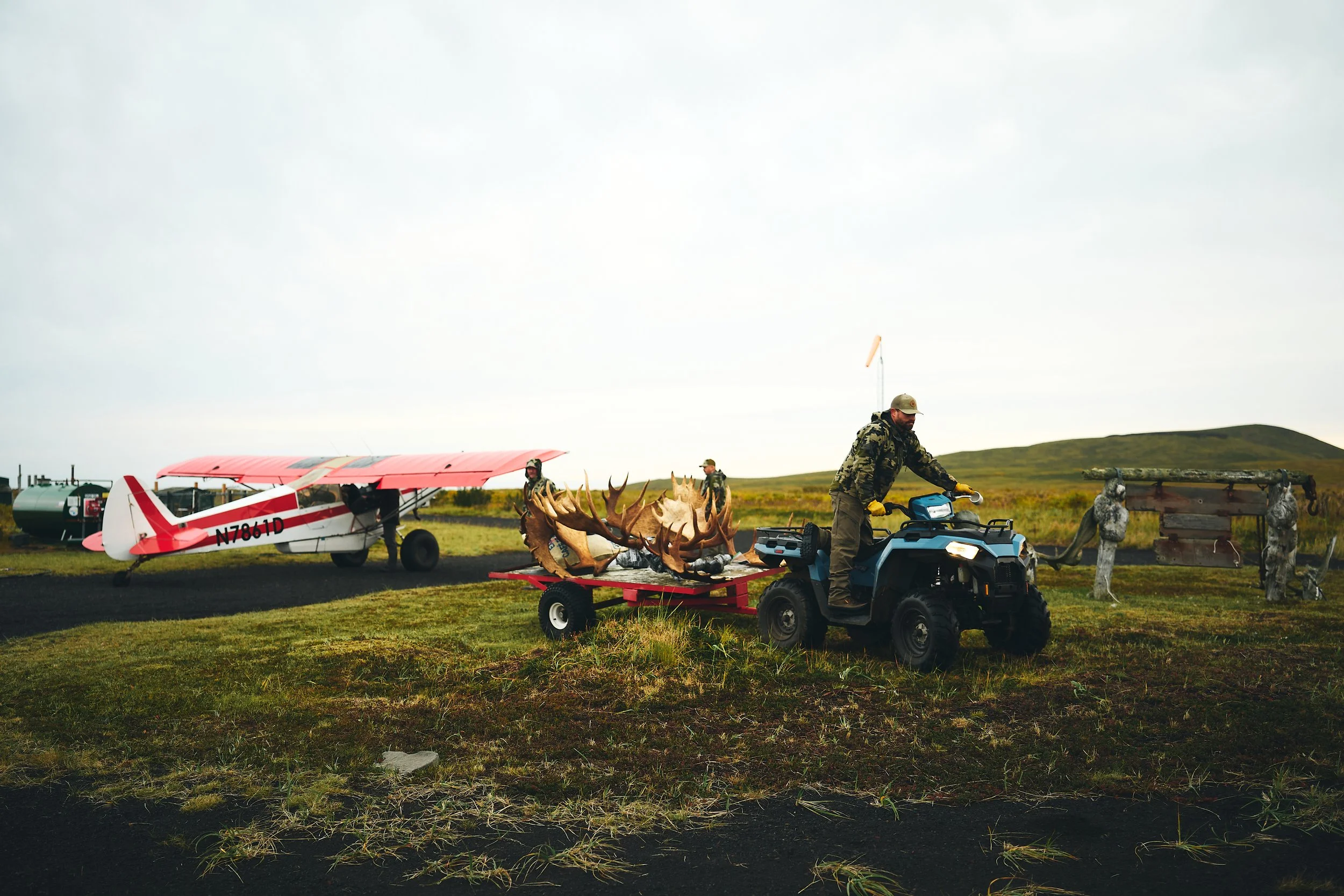
Behind every Wildman hunt is a crew driven by respect for the land and the hunt.
Return to Lodge & Departure
Once you’re flown back to the lodge, we begin the departure process promptly. Wildman hosts many guests throughout the season, and the lodge is not designed for extended stays post-hunt. Guides also need time to prepare trophies and support incoming hunters.
The team will coordinate your return to Anchorage based on weather and logistics. Exceptions for extended stays are rare and depend entirely on available resources.
Trophy Preparation
Trophy preparation is included with your hunt. Once completed, hides are transferred to D&C Expeditors for professional shipping preparation and coordination with your chosen taxidermist. Clients are responsible for all D&C Expeditors fees.
Your Wildman Experience
From touchdown on our airstrip to your final moments in camp, Wildman Lodge is dedicated to delivering a safe, ethical, and unforgettable Alaska hunt. Our guides, pilots, and staff bring decades of experience, deep respect for the land, and a commitment to your success.